The Hoover Dam
Designed by John L. Savage and constructed during the Great Depression in the United States, the Hoover Dam (or Boulder Dam as the Government opted to call it before restoring the name to Hoover Dam in 1947) is a real marvel of civil engineering and design. The arch-gravity design, curving upstream, ensures the force from the water is redirected to the rock walls. The forces this produces is enough to help support the dam itself.
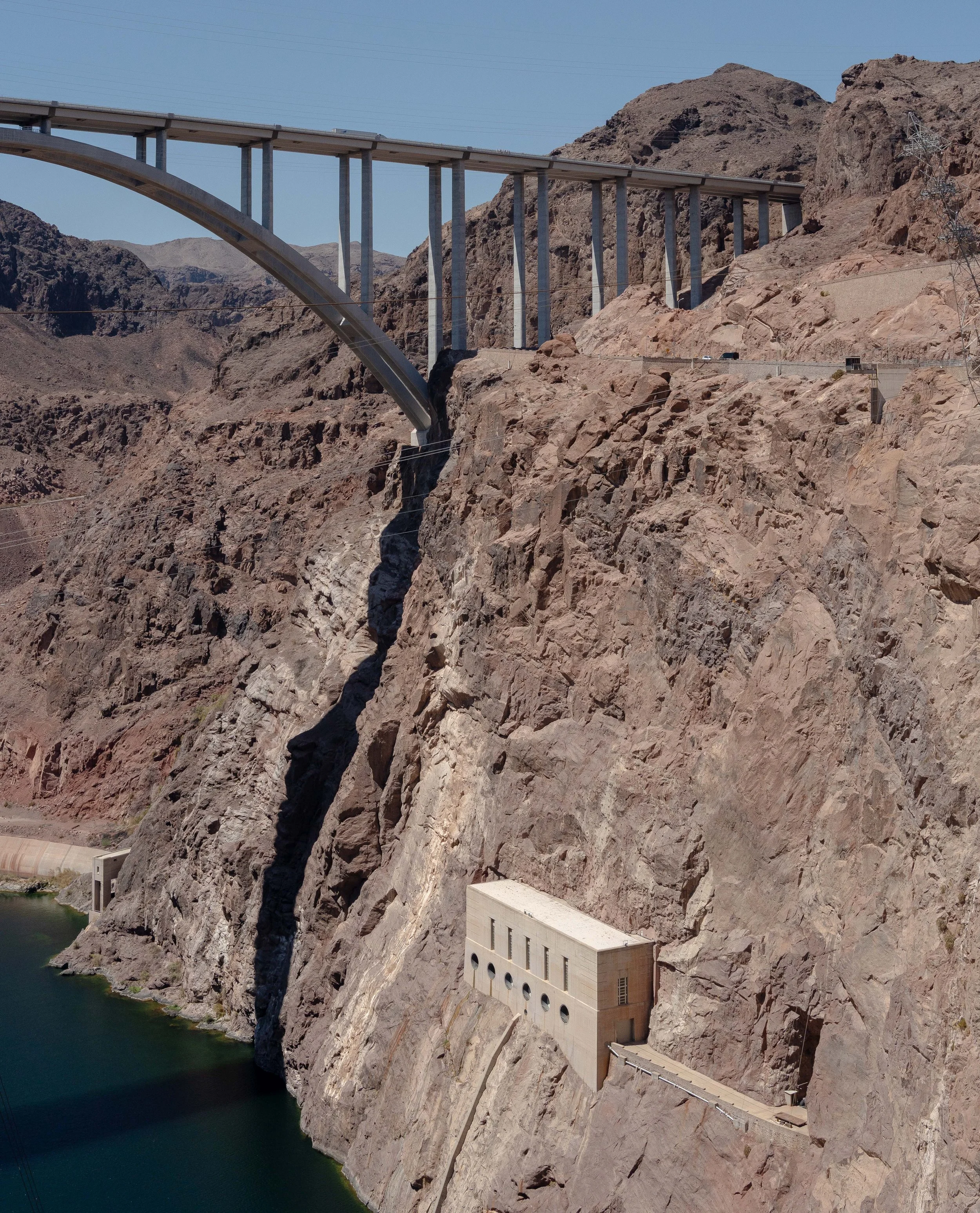
Straddling the border of Nevada (to the west) and Arizona (to the east), the dam provided vehicular access across the top to help vehicles cross the Colorado River. This remained the only way for vehicles to pass the dam until 2010 when the Hoover Dam Bypass was completed.
We visited the dam in the Summer of 2025, stopping for an hour or so on our way to Grand Canyon Village from Las Vegas. I’d read before our trip to the States that the drop in water levels in the upstream Lake Mead was eye-opening - perhaps a sorry indictment to the state of the climate. And the two-tone colour scheme of the canyon walls that you are greeted by attest to a sharp decrease in water volume in recent times.
What struck me the most, however, was the dam’s elegant art deco detailing. I expected a rather brutalist, utilitarian behemoth. I suppose it is; I just wasn’t expecting the considered and, frankly, beautiful finishing touches that are there. Some reading on this aspect of the dam revealed that the initial finished design (beyond the fundamental engineering aspects) were thought to be unremarkable for a project of such size and scale. Architect Gordon B. Kaufmann and artist Allen Tupper True were brought on board to refine the dam’s detailing and visual appeal. It was a lovely surprise to find a concrete-heavy, man-made monster had been given a subtle, but hugely effective, identity beyond its sheer size and scale. From the typefaces used on various buildings throughout the complex, to the balustrade profile and the handles adorning doors - it’s really rather beautiful.